Will Zcash's ZEC return to $500 or higher before 2026?

cointelegraph2025-12-09 tarihinde yayınlandı2025-12-09 tarihinde güncellendi

Özet

Zcash (ZEC) surged over 10% to $425, extending its recovery from recent lows around $300. Analysts note a potential double-bottom pattern, suggesting a possible rally toward $500 if key support holds. Large investors (whales) have accumulated over $100 million in ZEC, while smaller traders sold, indicating confidence among major holders. However, technical risks remain, including an overbought RSI and a bear flag pattern that could lead to a pullback toward $260–$280 if the uptrend weakens. The article highlights both bullish and bearish scenarios without providing investment advice.

Zcash (ZEC) extended its recovery on Tuesday, rising 10.29% in the past 24 hours to over $425, or 41.50% up from the lows of around $300 just a week ago.

Key takeaways:

  • ZEC eyes $500 as double-bottom signals and whale accumulation support the recovery.

  • Bear-flag risks persist, with overbought RSI hinting at a possible pullback toward $260–$280.
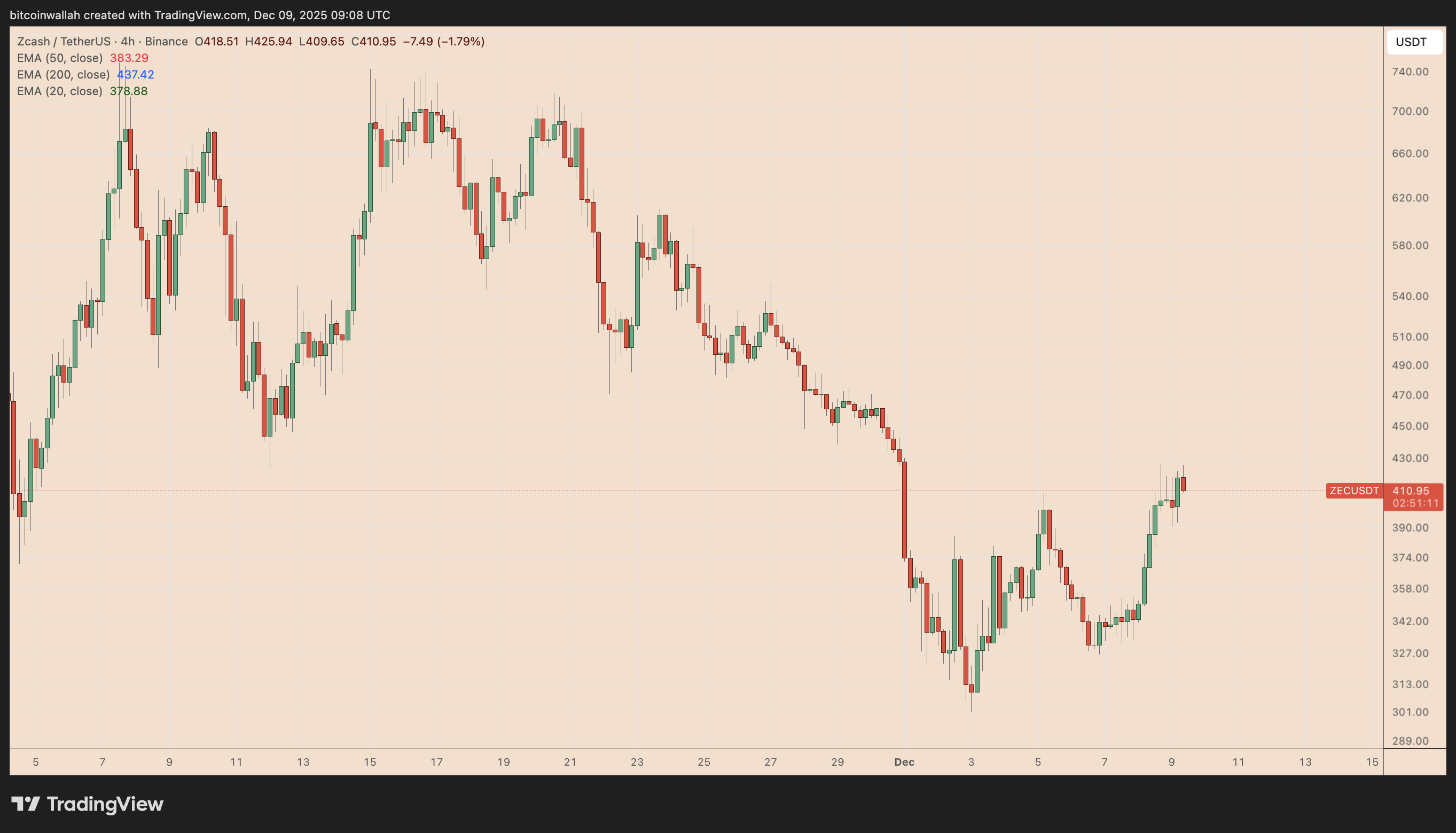
ZEC/USDT four-hour price chart. Source: TradingView

The sharp rebound prompted some analysts to anticipate a further rally to or above $500 in the coming days.

Can Zcash retest the psychological resistance?

From double bottom to $500 ZEC next?

Trader Goomba identified Zcash’s recent swing lows as a potential double-bottom structure.

The pattern appeared to develop in the $300–$310 region, where ZEC recorded two similar troughs within a short time frame. The subsequent move above the interim resistance near $380 marked what the trader described as a neckline breakout.
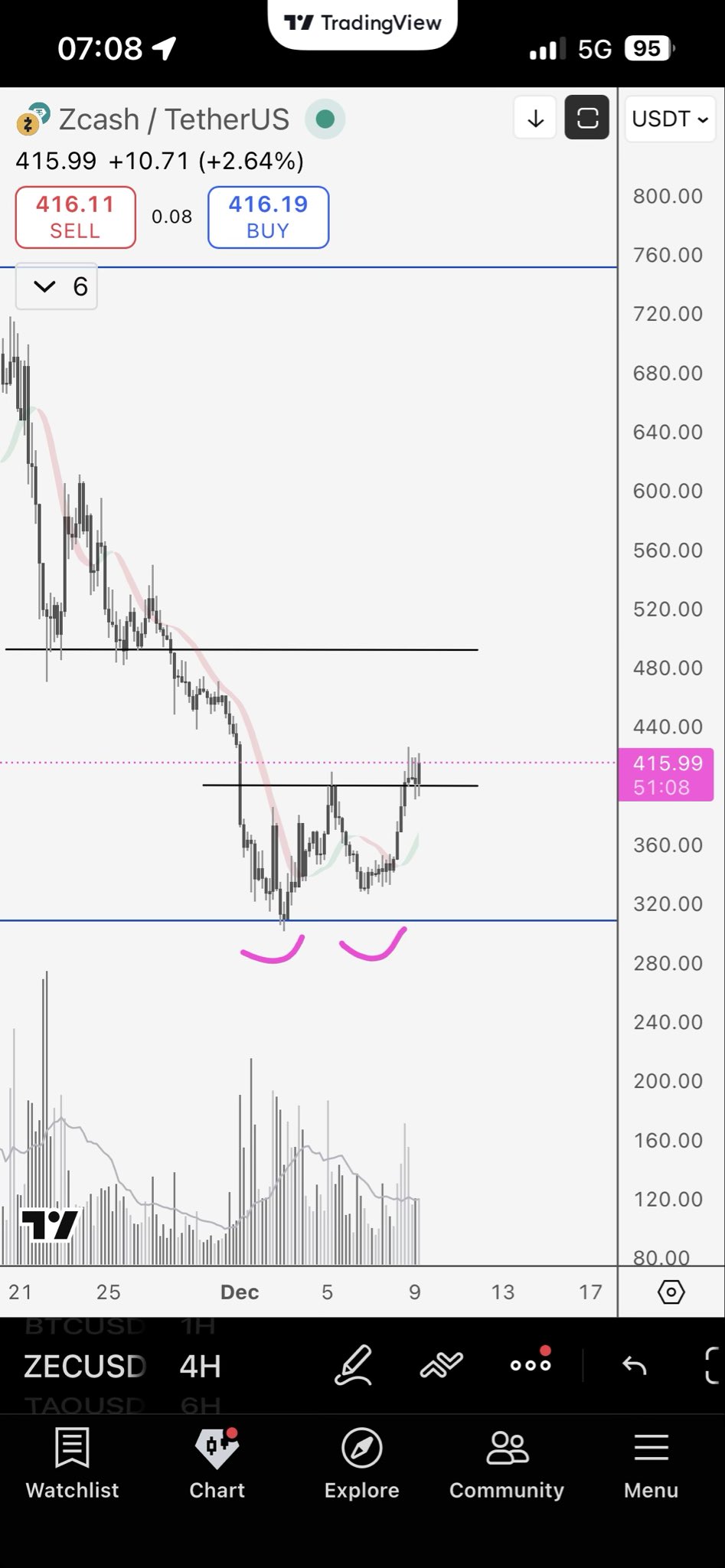
ZEC/USDT daily price chart. Source: TradingView/Goomba

Such formations carry a measured objective that places the next notable target in the $480–$500 range, coinciding with a previous supply zone.

Goomba noted that the structure remained valid as long as ZEC held above the reclaimed neckline level.

Zcash whales are absorbing selling pressure

ZEC’s retail holders ($0–$1,000) and mid-sized traders ($1,000–$100,000) cut more than $30 million in net exposure during the latest rebound, according to data highlighted by trader Ardi.
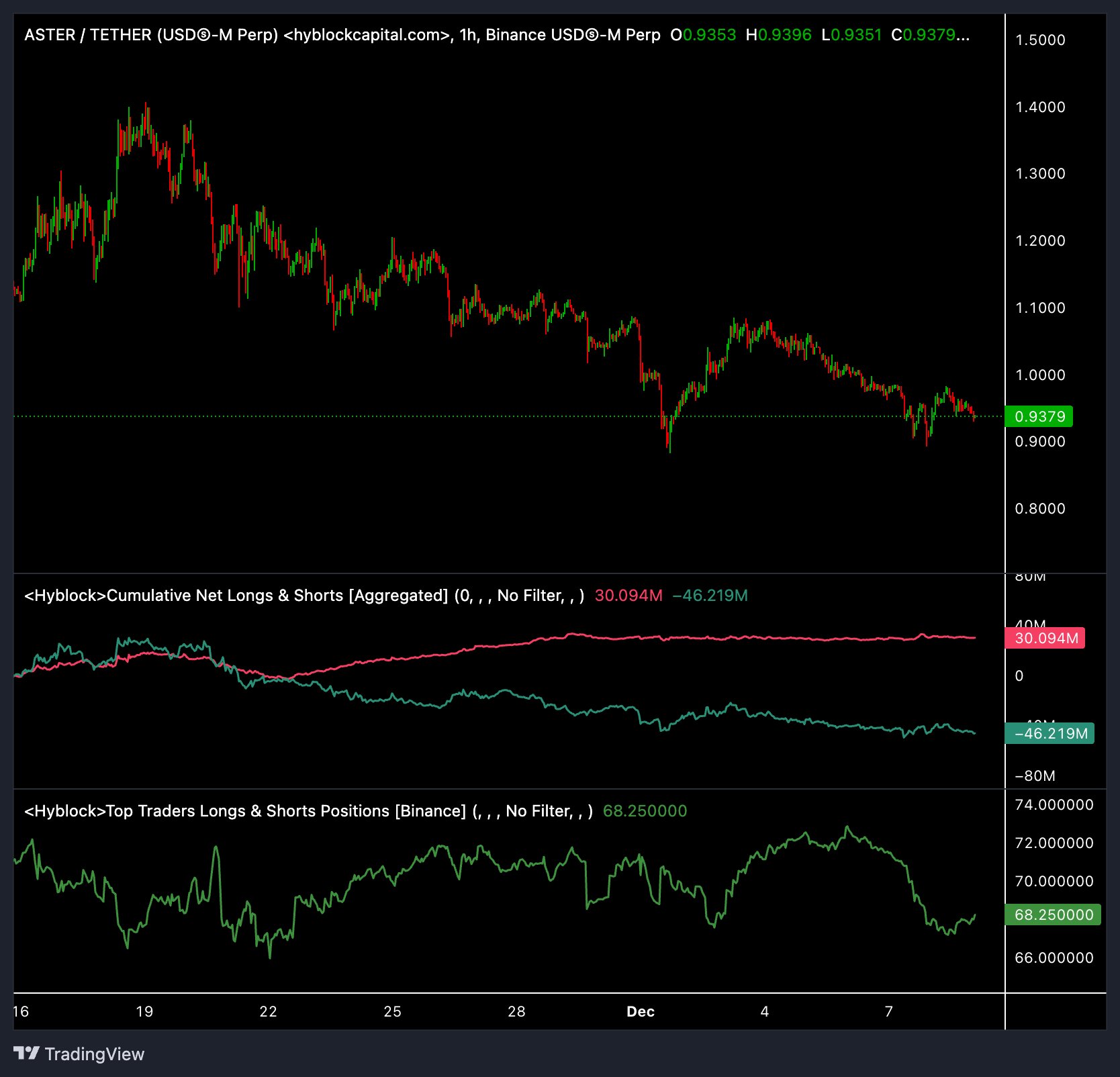
ZEC/USDT hourly chart. Source: TradingView/Ardi

In contrast, larger whale accounts ($100,000–$10 million) added over $100 million in the same period, suggesting a divergence in behavior.

Simply put, smaller participants appeared to sell into the rally while higher-capital accounts increased their exposure.

Related: What’s behind the surge in privacy tokens as the rest of the market weakens?

That raises ZEC’s potential to continue its rebound toward the $500 level, given that the larger investors are looking forward to higher prices.

Bear flag may spoil party for ZEC bulls

Zcash’s latest rebound unfolded inside what still appeared to be a classic bear flag pattern, a weakening relief channel that formed after a steep November sell-off.

Historically, these rising channels resolved to the downside, and ZEC’s failure to hold above the flag’s upper trendline suggested that sellers were already regaining control as of Tuesday.
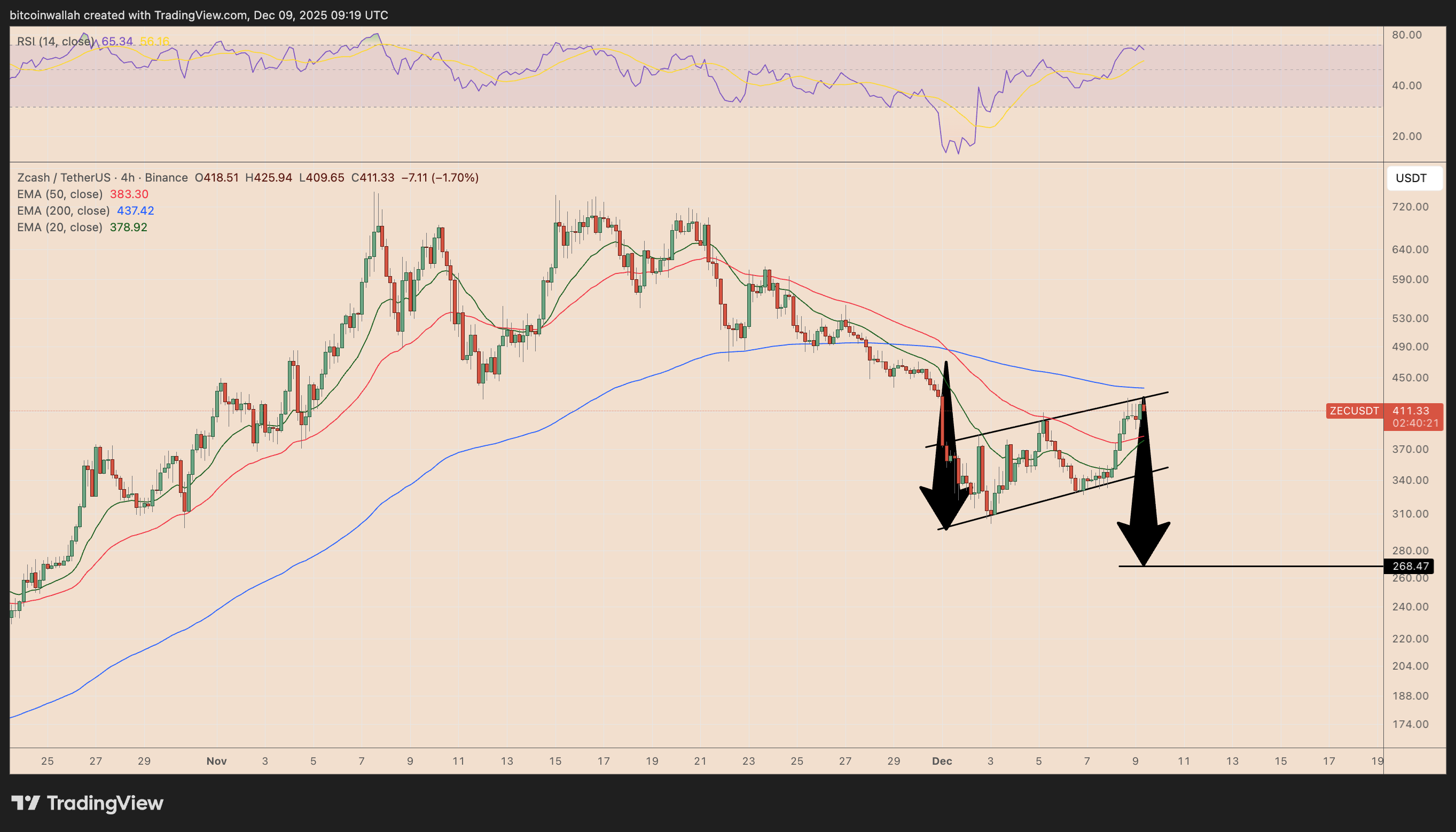
ZEC/USDT four-hour price chart. Source: TradingView

Price also struggled to break above the 200-day exponential moving average (200-4H EMA; the blue wave), reinforcing the bearish continuation setup.

At the same time, ZEC’s relative strength index (RSI) had pushed above the overbought threshold of 70, a region where upside momentum often fades.

Together, these signals suggested that a breakdown from the flag could have opened the door to a move toward the $260–$280 zone, which is approximately 35% below current price levels.

This article does not contain investment advice or recommendations. Every investment and trading move involves risk, and readers should conduct their own research when making a decision.


İlgili Okumalar

Institutions Are Taking Over the Crypto Market: Is This the End of Decentralization, or the Prelude to a New Cycle?

The cryptocurrency market is undergoing a structural shift in 2025, with institutional investors now accounting for approximately 95% of capital inflows, while retail participation has declined to 5–6%. According to Aishwary Gupta of Polygon Labs, this transition is driven by maturing infrastructure rather than market sentiment. Major asset managers like BlackRock, Apollo, and Hamilton Lane are allocating portions of their portfolios to digital assets via ETFs and on-chain tokenized products, leveraging public blockchains that meet traditional finance compliance standards. Key drivers include yield generation through tokenized treasuries and institutional staking, followed by efficiency gains from faster settlements, shared liquidity, and programmable assets. While retail investors retreated due to losses from meme coin cycles, Gupta believes they will return as more regulated and transparent products emerge. He argues that institutional involvement does not undermine decentralization; instead, it enhances legitimacy and fosters a hybrid financial ecosystem where DeFi, NFTs, and traditional assets coexist on public chains. Although increased compliance may limit some experimentation, it promotes more sustainable innovation. Looking ahead, institutional liquidity is expected to reduce market volatility and accelerate the growth of real-world asset tokenization and cross-chain interoperability infrastructure. This evolution signals crypto’s transition from a speculative asset to a core component of the global financial system.

比推6 dk önce

Institutions Are Taking Over the Crypto Market: Is This the End of Decentralization, or the Prelude to a New Cycle?

比推6 dk önce

World's Richest Man, 'Silicon Valley Iron Man' Musk, to Take SpaceX Public in 2026!

Elon Musk, the world's richest person and CEO of SpaceX, plans to take the company public in 2026 with a target valuation of approximately $1.5 trillion. The IPO is expected to raise "significantly more than $30 billion," potentially making it the largest in history, surpassing Saudi Aramco's 2019 offering. A key driver of this ambitious valuation is a new narrative: **space-based AI computing**. Musk introduced the concept of "space AI compute" at a recent investor conference, arguing that within five years, running AI training and inference in space could become the lowest-cost solution. The core advantages include near-uninterrupted solar power and the vacuum of space acting as an ultimate heat sink. Additionally, with its reusable Starship rockets, SpaceX aims to drastically reduce launch costs to as low as $200–300 per kilogram. This vision, however, faces significant technical hurdles. Challenges include managing extreme heat radiation in direct sunlight, protecting hardware from cosmic radiation, and the economic risks associated with potential launch failures. Competitors are also entering the arena, including Jeff Bezos’ Blue Origin, which is developing its own orbital data centers, and Sam Altman’s OpenAI, which is reportedly considering acquiring a rocket company. Despite the challenges, Wall Street has responded positively. Firms like Ark Invest are now valuing SpaceX as a high-growth AI infrastructure company rather than a traditional aerospace firm, projecting that its space-based compute business could generate $80–120 billion in high-margin revenue by 2030. The success of this new "space dream" hinges on the continued development of Starship, overcoming technical barriers, and navigating future regulatory landscapes.

marsbit20 dk önce

World's Richest Man, 'Silicon Valley Iron Man' Musk, to Take SpaceX Public in 2026!

marsbit20 dk önce

İşlemler

Spot
Futures
活动图片